By the people of Second Home · April 2026
People always want to know: why?
Why would someone give up a career in advertising, a teaching job, a foreign trade business — and move to a farm in northern Thailand to grow vegetables and shovel compost with their bare hands?
The honest answer is different for each of us. But the thread running through every story is the same: we were running on a program that wasn’t ours. And at some point, we stopped.
Here are five of our stories.
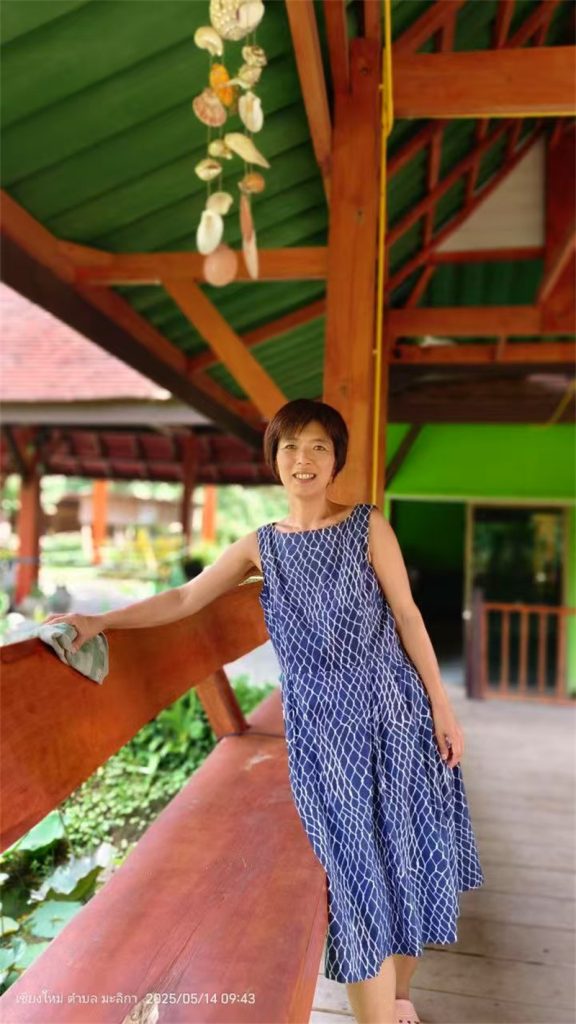
Jiao’e: “I went from being someone’s obedient daughter to being free.”
For most of her life, Jiao’e did what she was told. She was a traditional woman who followed her mother’s expectations — marry, raise children, be agreeable. It wasn’t a terrible life. It just wasn’t hers.
The shift didn’t come through rebellion. It came through recognition: the life she was living had been designed by other people’s fears, not by her own sense of what was true. When she found Second Home, she didn’t see it as an escape. She saw it as the first place where she was allowed to be herself — not the version of herself that made everyone else comfortable.
Today, Jiao’e works in the garden alongside others. She talks and laughs while she works. That’s not a small thing. For someone who spent decades holding herself in, the experience of working side by side with people who actually see you — and who let you see them — is what freedom feels like. Not the freedom to do whatever you want, but the freedom to stop pretending.
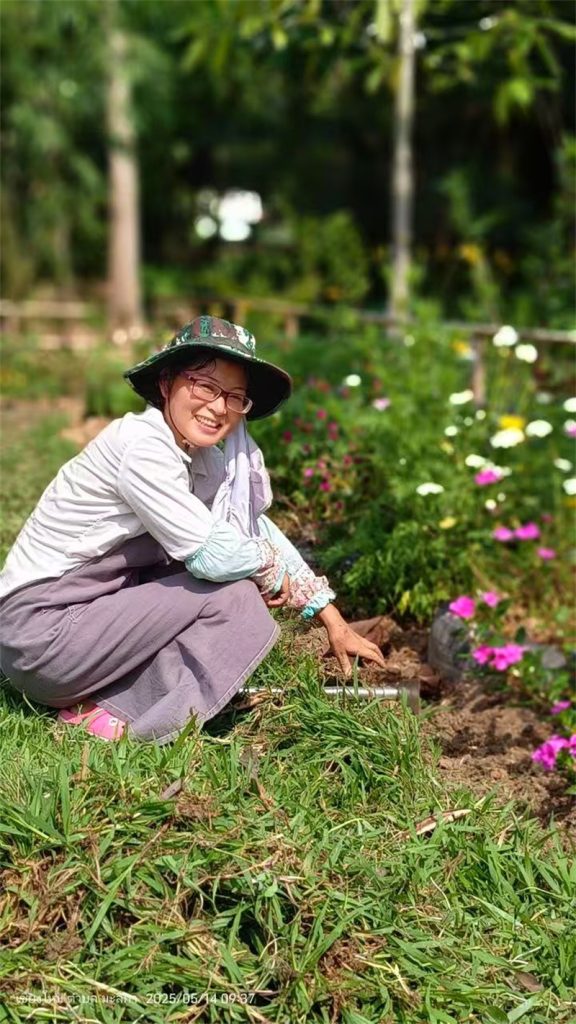
Baichuan: “I used to revise designs for clients. Now I work for something I believe in.”
Baichuan was an advertising designer. An atheist. A practical, urban professional who spent her days revising layouts because a client wanted the logo three pixels to the left.
She didn’t come to Second Home looking for God. She came looking for meaning — and was surprised to find that the two were connected. What struck her was not the philosophy in the abstract, but the way it showed up in daily life. In her old career, every hour of labor served someone else’s commercial interest. Here, every hour serves something she can actually believe in.
She’s direct about what labor means to her now: it’s physical training for the body, and it’s a way of giving without calculation. In the ad world, everything was transactional — you deliver, you get paid, you deliver again. At Second Home, work has no price tag. You dig a trench because the garden needs a trench. You carry stones because a path needs building. The reward is not in your bank account. It’s in the fact that you went to bed tired in a way that feels clean, not depleted.
Baichuan still doesn’t use religious language naturally. But when she talks about why she stays, she talks about contribution — the experience of pouring effort into something larger than yourself, with no expectation of return. She calls it accumulating merit. Others might call it finding purpose. The words don’t matter. The experience does.
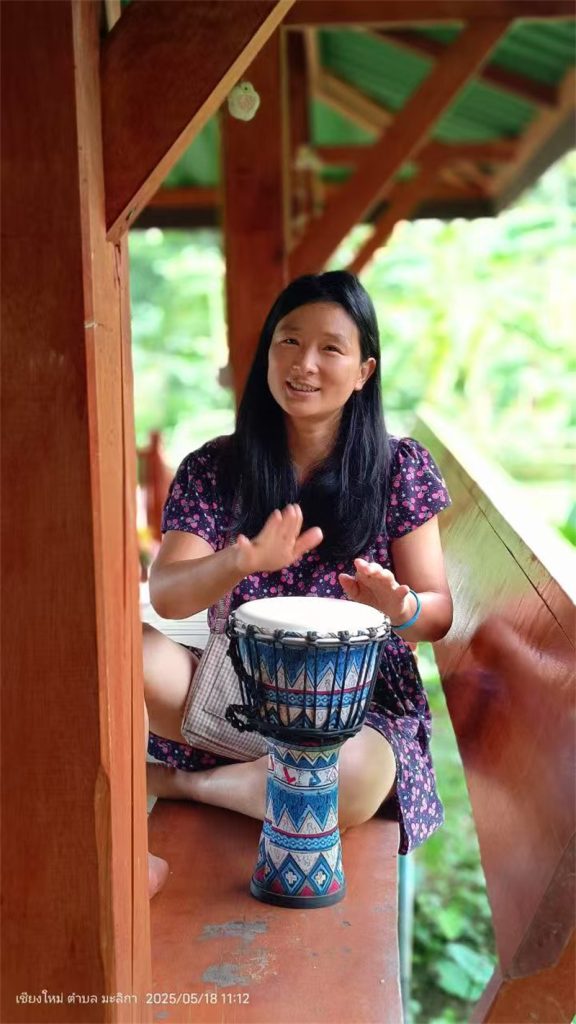
Qianzi: “I finally found people on the same frequency.”
Before Second Home, Qianzi felt like she was broadcasting on a channel no one could receive. She had thoughts and feelings that didn’t fit the social scripts around her. She wasn’t depressed exactly — she was lonely in a way that being around people didn’t fix.
She describes her previous life the way many people secretly experience theirs: constantly adjusting, constantly self-monitoring, constantly wondering why authentic connection felt so elusive even when she was surrounded by others.
At Second Home, something clicked. She found people who operated on the same frequency — people who didn’t need everything explained, who didn’t flinch at directness, who were more interested in truth than in social comfort. For the first time, she could stop performing.
When Qianzi pulls weeds in the garden, she sees it as pulling the weeds of her own mind. She talks about developing a feeling of connection with the plants she tends — a kind of quiet communication that sounds strange if you haven’t experienced it, and completely natural if you have. What she’s really describing is presence: the experience of being fully engaged with what’s in front of you, without the constant mental chatter about what other people think.
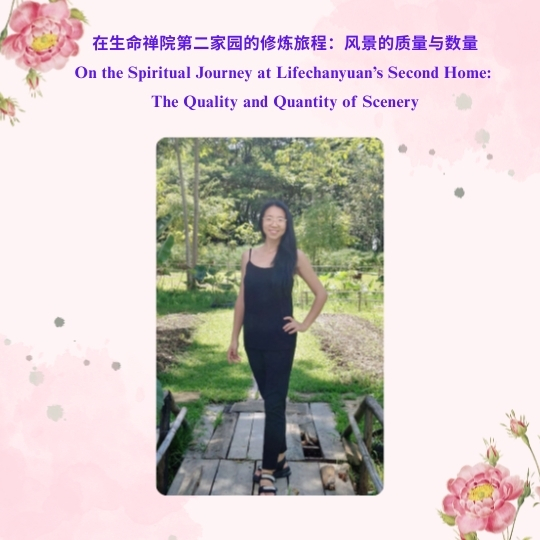
Jiejing: “I lost 22 kilos. I stopped ordering takeout. I watched a cucumber flower and felt more accomplished than any paycheck ever made me feel.”
Jiejing was a primary school teacher. Then she worked in foreign trade. She ate takeout and barbecue. She was overweight, stressed, and running from one obligation to the next.
The numbers tell part of her story: she lost 22 kilograms after moving to Second Home. But numbers don’t capture what actually changed. What changed was the relationship between her body and her life.
In her previous existence — she uses that word deliberately — her body was a vehicle she neglected while she drove it from task to task. Feed it fast food, push it through a commute, collapse it into bed, repeat. At Second Home, her body became something she inhabits. She works in the sun. She carries things. She bends, lifts, digs. The land is her gym, but it’s more than that — it’s a place where physical effort has visible results.
She talks about watching a cucumber she planted begin to flower, and the feeling that rose in her chest. It was a feeling she’d never gotten from a salary, a promotion, or a compliment. It was the feeling of having participated in something alive — of having put a seed in the ground and watched life answer.
That feeling, she says, is worth more than anything she earned in her career. She’s not being dramatic. She’s being precise.
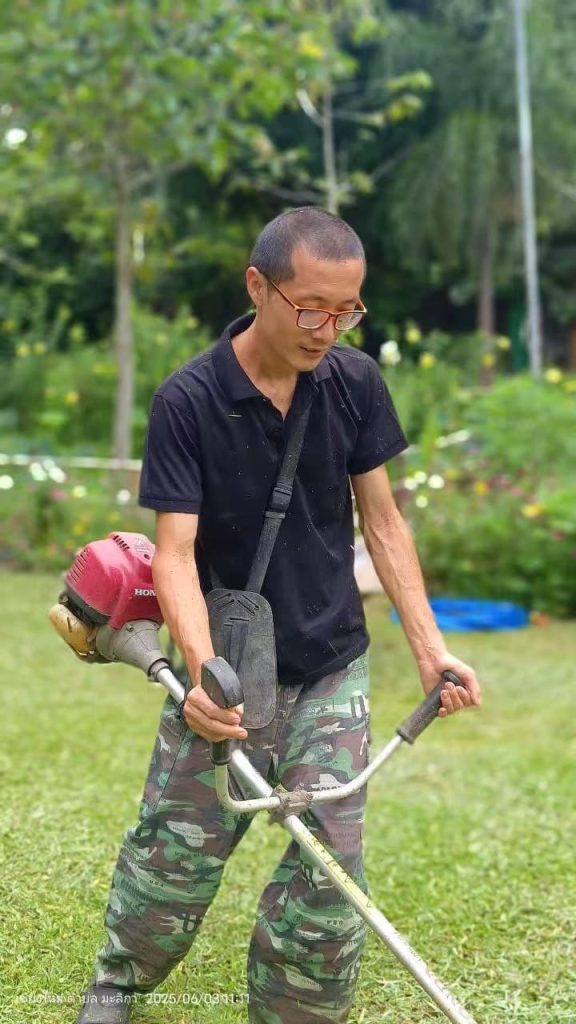
Yangle: “I had a peak experience once — a moment of total unity with everything. Then it vanished. I came here to find a way to live inside that experience permanently.”
Yangle’s story is different from the others. He wasn’t unhappy in the conventional sense. He’d already been on a spiritual path for years. He’d experienced what some traditions call satori, what others call flow, what he simply describes as a moment when the boundary between self and world dissolved and everything was one.
The problem was that it didn’t last. The moment passed. Normal consciousness returned. And normal consciousness, once you’ve tasted the alternative, feels like wearing a suit two sizes too small.
Yangle didn’t come to Second Home to escape suffering. He came to find an environment where the conditions for that experience could be sustained — not as a peak, but as a baseline. A place where the noise was low enough, the rhythm natural enough, and the people sincere enough that the doors of perception could stay open.
He describes physical labor in a way that surprises most people: as a form of repayment. He believes that human beings carry debts to the earth, to nature, to the lives that sustain us. Manual work is how you pay those debts. Not with guilt, but with gratitude. You put your hands in the soil, and you give back.
What he does every day is simple: he farms, he carries, he builds. He doesn’t think too much while he works. That’s the point. The thinking mind is exactly what blocks the experience he’s looking for. In the garden, with dirt under his fingernails and sweat on his back, the thinking stops. And what remains is what he came here to find.
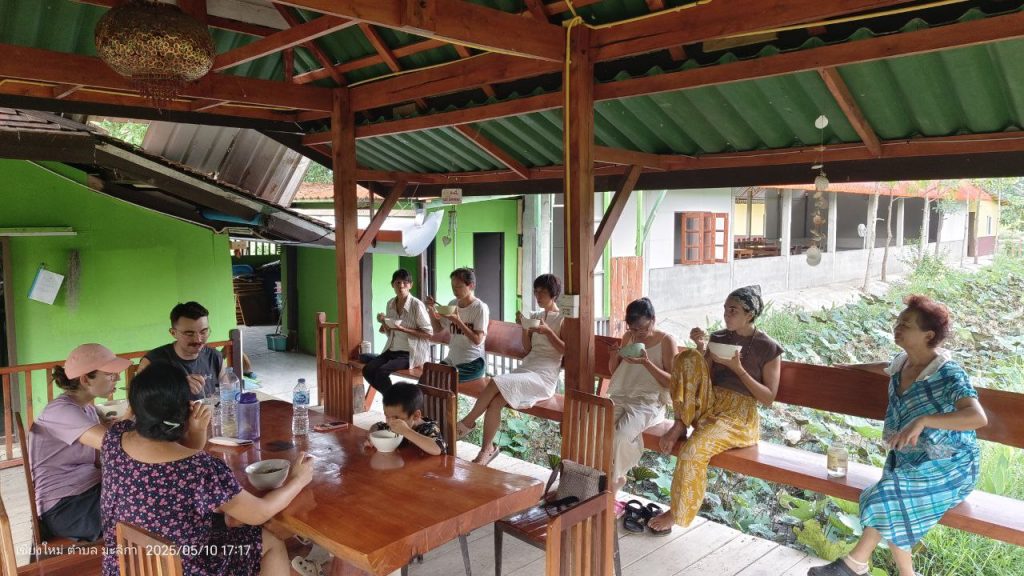
Five people. One discovery.
Our stories are different. Our backgrounds, our temperaments, our reasons for leaving — all different. But we all discovered the same thing:
The life we were living before was running on a program we didn’t write. A program that said: earn money, buy things, protect what’s yours, compete with your neighbors, and call the result “freedom.” We ran that program faithfully. And it produced anxiety, loneliness, physical deterioration, and a quiet despair that we medicated with consumption and distraction.
At Second Home, we switched to a different program. One where the necessities of life — food, shelter, clothing, care — are provided by the community, so no one needs to worry about survival. One where there is no money inside the community, no purchasing, no financial pressure. One where no one supervises you — you work because the work is there and because you’ve chosen to be the kind of person who does what needs doing. One where people who don’t fit the program leave on their own, not because they’re expelled, but because a life of sincerity and shared labor either resonates with you or it doesn’t.
This isn’t for everyone. We know that. But it is for more people than currently know it exists.
If something in these stories sounds familiar — if you recognized your own restlessness, your own hunger for something you can’t name — then maybe the program you’re running isn’t yours either.
If this is your first time learning about us, please read more.
What We Learned from 18 Years of Living in Community
5 Things That Surprised Visitors at Second Home
Why We Left Our Jobs and Moved to a Farm in Thailand
The Problem with Intentional Communities — and How We Solved It
Come see what a different program looks like.
You don’t have to decide anything. Just come for a few days. Work alongside us. Eat what we eat. Sleep where the roosters wake you. See how it feels.
Second Home is in Mae Tha Ton, Chiang Mai, Thailand. There is no fee, no obligation, and no catch.
Email: [email protected] WhatsApp: +66 90 933 7102 Website: civ3.lifecosmos.org
Second Home is a life-centered community practicing the principles of Civilization 3.0. Five real people told their stories here. Hundreds more have their own. Come add yours.