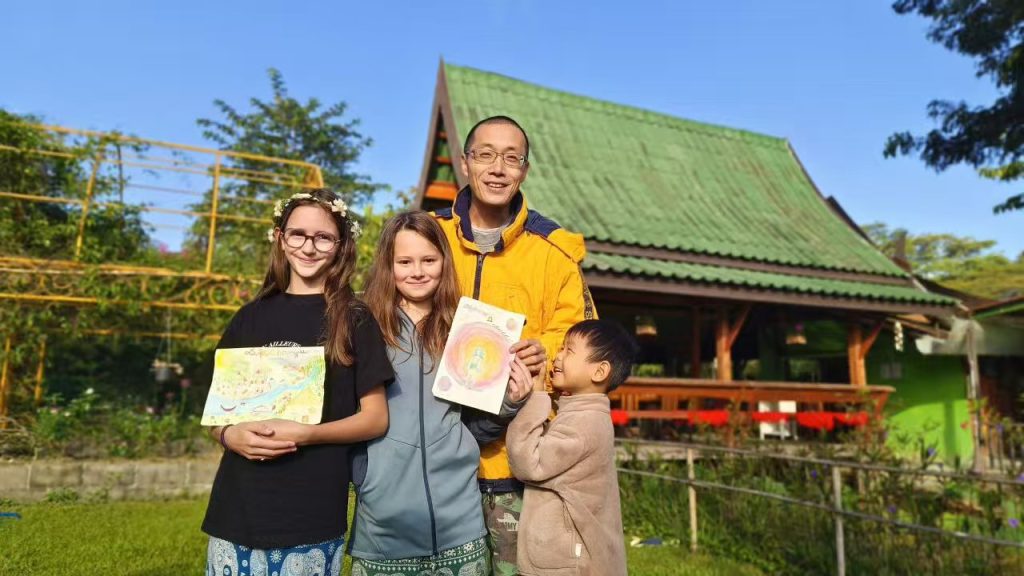
By the people of Second Home · April 2026
Over five hundred people from more than thirty countries have visited Second Home. They come from France, India, Singapore, Malaysia, Brazil, Canada, Korea, and dozens of other places. Some stay for three days. Some stay for weeks. A few never leave.
They arrive with questions. They leave with something harder to describe — a feeling, a memory, a quiet shift in what they believe is possible. And almost all of them mention the same surprises.
Here are five things visitors did not expect.
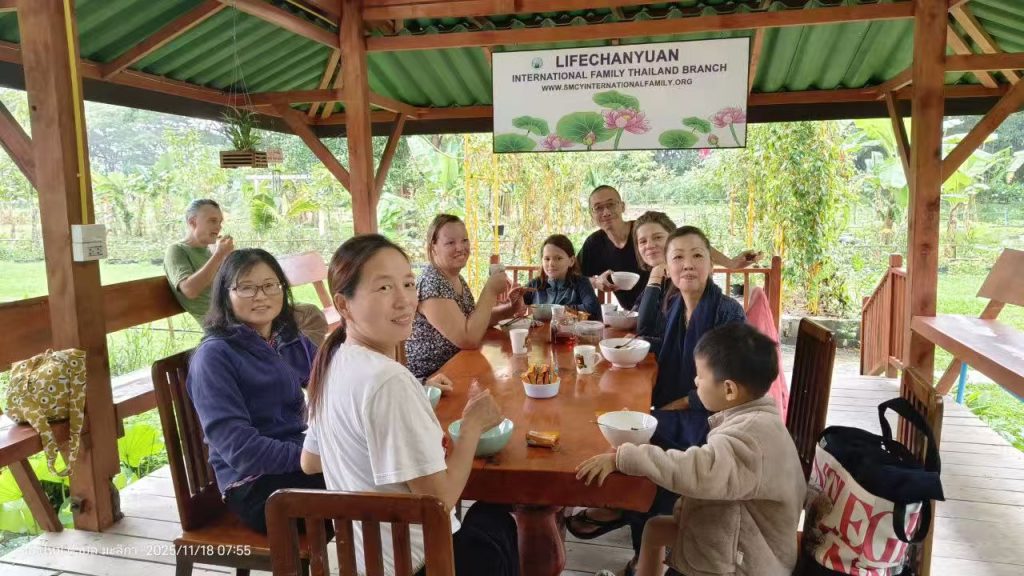
1. Nobody asked them for anything.
Most visitors arrive slightly on guard. They’ve heard about communities before — spiritual groups that recruit, eco-villages that charge hefty fees, communes with charismatic leaders who expect obedience.
Second Home is none of those things.
There is no entry fee. No membership pitch. No donation box. No one hands you a pamphlet or asks you to sign anything. You are welcomed, fed, given a place to sleep, and invited — not required — to join whatever is happening that day. If you want to help in the garden, great. If you want to sit under a tree and read, that’s fine too.
This surprises people more than anything else. In a world where every interaction seems to have an agenda, a place with no agenda at all feels almost disorienting. Several visitors have described the same experience: spending the first day or two waiting for “the catch” — and then slowly realizing there isn’t one.
2. The children were the happiest they’d ever seen.
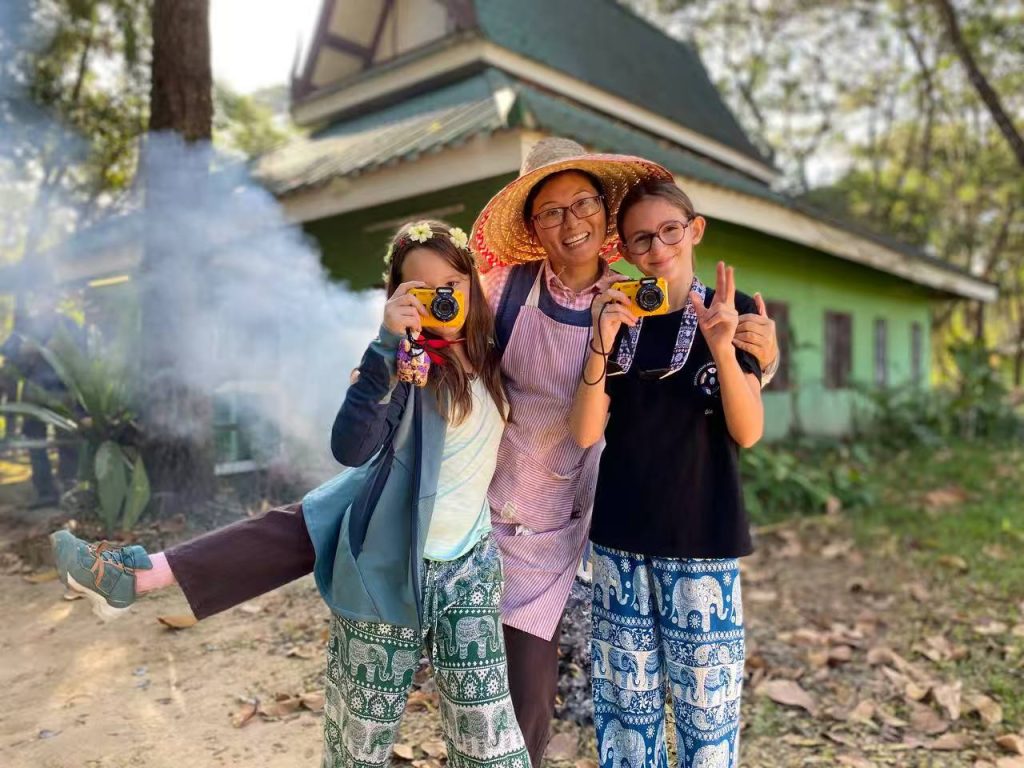
A family from France visited for one week. They were so moved by the experience that they told another French family about it, and soon eight visitors — five adults and three children — were living at Second Home together.
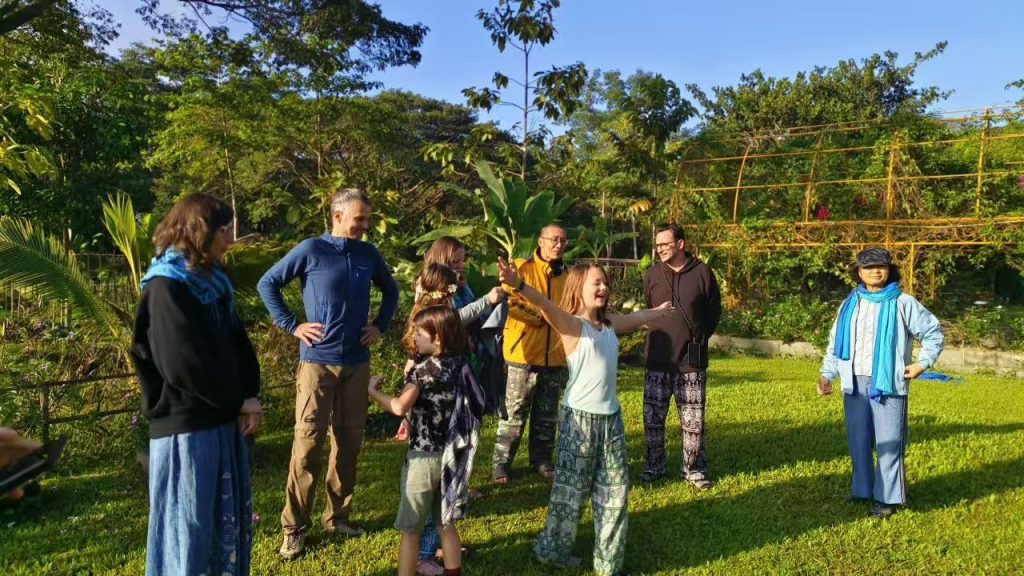
What struck the parents most was not the philosophy, not the organic food, not the beautiful land. It was watching their children. Within hours, the kids had joined the community’s children in running through the garden, swinging on the outdoor swing, chasing each other through the fruit trees. They helped with farm work alongside the adults — hauling compost, weeding the flower beds, peeling roselle. When they were tired, they sat quietly at a table drawing pictures together.
On their last evening, the community organized a bonfire, games, and music. Under the stars, adults and children danced and sang together. Before leaving, two of the French girls made paintings for the community and wrote thank-you notes in Chinese — a language they didn’t speak — carefully copying each community member’s name onto the back of their artwork.
The children cried when it was time to go. Their parents said it was the first time their kids had ever not wanted to leave a place.
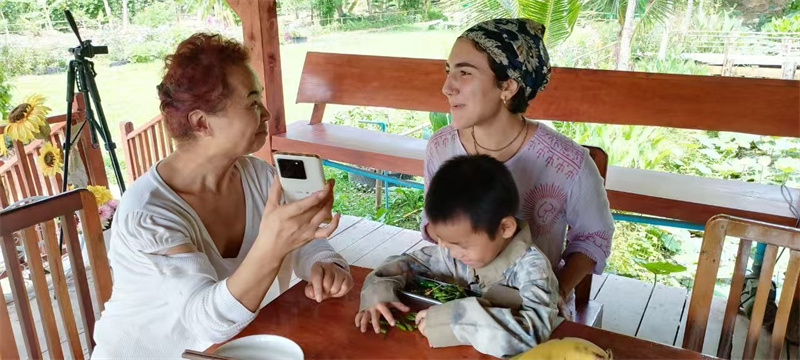
3. People from completely different cultures understood each other immediately.
Second Home has hosted visitors from India, France, Singapore, Malaysia, Brazil, Korea, and many other countries. Most of them don’t speak Chinese. Many don’t speak English fluently either. And yet, visitor after visitor describes the same thing: a sense of immediate connection that doesn’t depend on language.
An Indian woman named Manyatha spent time at Second Home and was struck by how naturally she fit in — despite being from a completely different cultural background. A visitor from Singapore named Rosalind felt the same. A young man from Malaysia named Alex, who came with curiosity and left with something closer to conviction.
What makes this possible is not some trick of cross-cultural communication. It’s simpler than that: when people are genuinely kind, when they work together with their hands, when they share food and laughter without pretense — language becomes secondary. The community’s warmth and the sincerity of its members communicate more clearly than words.
One visitor put it this way: “I didn’t understand most of what people were saying. But I understood everything that mattered.”
4. The work was the best part.
This is the surprise that visitors find hardest to explain to friends back home.
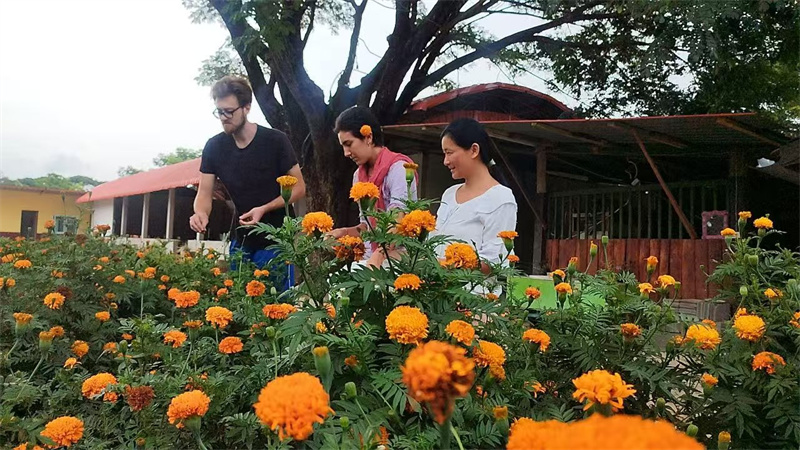
Most people associate manual labor with drudgery — something to be minimized, outsourced, automated. At Second Home, work is one of the most joyful parts of the day. Visitors join community members in hauling fertilizer, turning soil, sweeping fallen leaves, weeding the garden, repairing a wooden bridge, building new structures, paving paths. The French visitors even cooked a French meal for the entire community.
What makes it different? Two things. First, the work is done together — not in isolation, not under a boss’s eye, but shoulder to shoulder with people who are doing it because it needs doing and because they enjoy each other’s company. Second, the results are immediate and tangible. You spend a morning turning soil, and by afternoon there are seeds in the ground. You repair a bridge, and that evening someone walks across it carrying dinner.
Several visitors have described the experience of farm work at Second Home as the first time they understood what “meaningful work” actually feels like. Not meaningful in the corporate sense — not “impactful” or “purpose-driven.” Meaningful in the oldest sense: you did something with your hands, alongside people you care about, and the world is slightly better for it.
5. They didn’t want to leave.
This is the most consistent surprise of all. It doesn’t matter whether the visitor is twenty-two or sixty-five, whether they come from Paris or Pune, whether they planned to stay for three days or three weeks. When the time comes to leave, something catches in the throat.
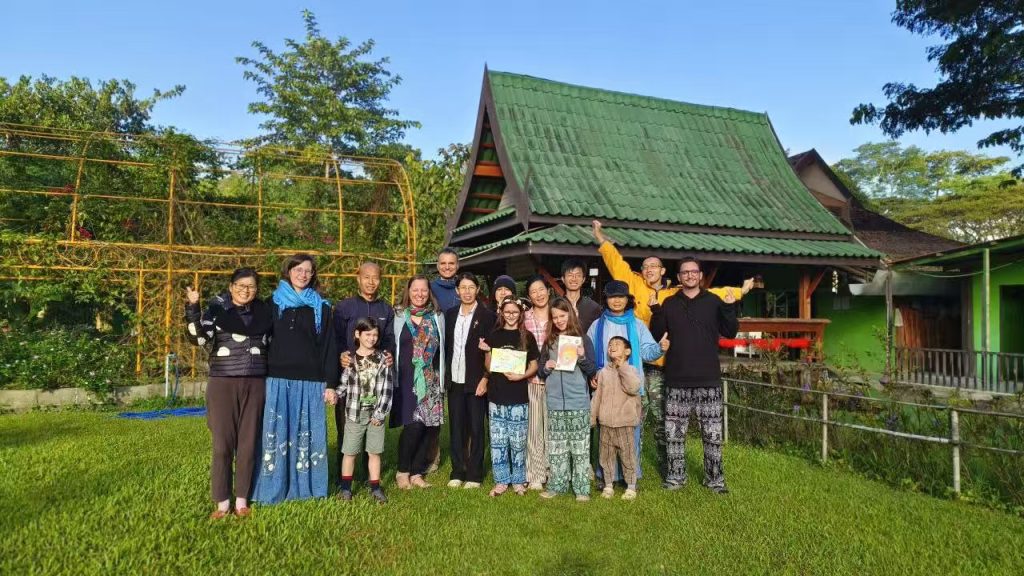
The community holds a farewell gathering on the last evening — a meal together, sometimes a bonfire, sometimes music and dancing under the open sky. Visitors who arrived as strangers a week earlier find themselves surrounded by people who feel like family. The parting is genuine. The tears are real.
And here is what makes it remarkable: these visitors have only been here for a few days. They didn’t grow up together. They don’t share a language or a culture or a history. What they share is the experience of having lived, briefly, the way human beings were meant to live — in community, with purpose, close to the earth, surrounded by people who are genuinely kind.
That experience is hard to forget. And it is harder still to return to a world organized around isolation, competition, and screens — and pretend that what you saw at Second Home was not real.
It was real. It is real. And you can come see it for yourself.
If this is your first time learning about us, please read more.
What We Learned from 18 Years of Living in Community
5 Things That Surprised Visitors at Second Home
Why We Left Our Jobs and Moved to a Farm in Thailand
The Problem with Intentional Communities — and How We Solved It
Visit Second Home
Second Home is in Mae Tha Ton, Chiang Mai, Thailand. Visitors are welcome year-round.
There is no fee, no application process, and no obligation. Write to us and tell us a little about yourself — we read every message.
Email: [email protected]
WhatsApp: +66 90 933 7102
Website: civ3.lifecosmos.org
Second Home has welcomed over 500 visitors from 30+ countries since 2009. It is a life-centered community practicing the principles of Civilization 3.0. Learn more at civ3.lifecosmos.org.